

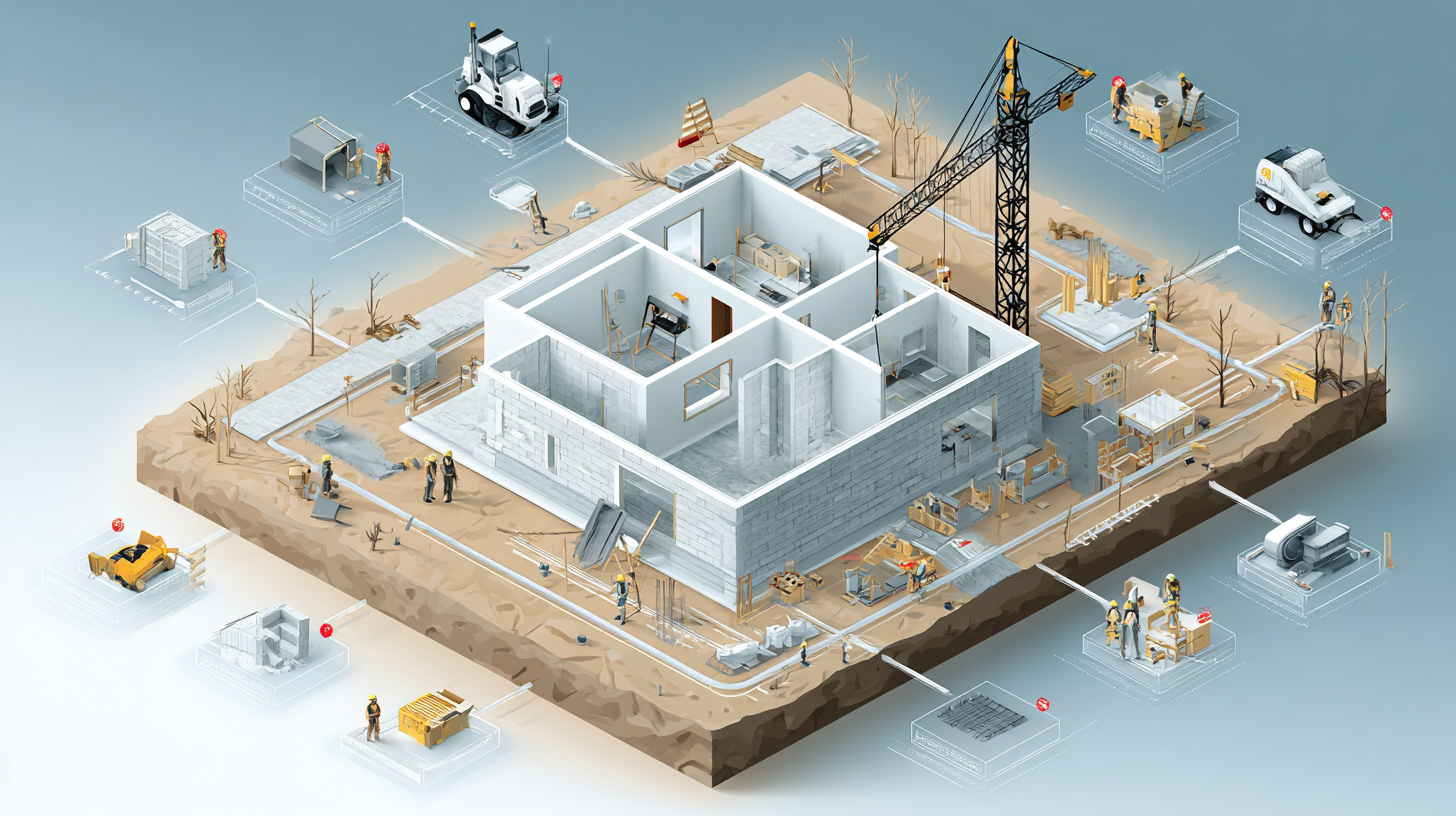
Step-by-Step Individual House Construction Process in Chennai

Introduction
Building your own house in Chennai is one of the most exciting and rewarding milestones you will ever experience. Whether it is a compact villa in Velachery or a spacious independent home in ECR, the journey from an empty plot to a finished house involves careful planning, regulatory compliance, and skilled execution. For many families, this is a once-in-a-lifetime investment, and partnering with a residential construction company in Chennai that understands local conditions can make all the difference between a stressful ordeal and a smooth, enjoyable process.
Chennai’s unique climate, soil conditions, and municipal regulations demand construction expertise that goes beyond textbook knowledge. From CMDA approvals to monsoon-proof waterproofing, every decision must be tailored to this city. That is precisely why thousands of homeowners across Tamil Nadu turn to the best construction company in Chennai for guidance at every stage.
At Buildiyo, we bring together AI-powered project management, experienced architects, and skilled labour to deliver homes that are built on time, within budget, and above expectations. In this comprehensive guide, we will walk you through the entire individual house construction process in Chennai step by step so you know exactly what to expect from start to finish.
Step 1: Define Your Requirements and Set a Realistic Budget
Every successful construction project begins with clarity. Before you even look at a plot of land, take the time to define what you truly need. How many bedrooms do you want? Do you need a home office? Is parking for two cars essential? Will elderly family members live with you, requiring ground-floor bedrooms? These are the foundational questions that shape everything that follows.
Once your wish list is ready, the next critical step is setting a budget. In Chennai, the cost of constructing an individual house generally ranges between ₹1,800 and ₹3,500 per square foot depending on the quality of materials, design complexity, and finishes. A reputed top construction company in Chennai will help you create a detailed cost breakdown that includes not just the obvious expenses like materials and labour, but also CMDA approval fees, soil testing charges, architect consultation costs, interior design budgets, and a contingency fund of around 10–15% of the total estimate.
Pro tip: Never start construction without a written, itemised budget. Verbal estimates lead to disputes. At Buildiyo, we use AI-powered cost estimation tools to generate accurate, transparent quotations so there are no surprises down the line.
Step 2: Purchase and Verify Your Plot
If you already own a plot, you are one step ahead. If not, choosing the right land is one of the most important decisions you will make. Chennai offers a wide range of options from well-connected localities like Anna Nagar, Adyar, and Tambaram to rapidly developing corridors along OMR, Sholinganallur, and Medavakkam.
Key Factors to Consider When Buying a Plot
CMDA or DTCP Approval: Ensure the plot has valid approval from the Chennai Metropolitan Development Authority (CMDA) or the Directorate of Town and Country Planning (DTCP). Unapproved plots can create serious legal complications and make it impossible to obtain building permits.
Clear Title and Encumbrance Certificate: Verify ownership through a title search and obtain an Encumbrance Certificate (EC) covering at least the last 15 years. This confirms that the property is free from legal disputes, mortgages, or unpaid liabilities.
Soil Quality: Chennai has varying soil types, from rocky terrain in areas like Pallavaram to clay-heavy soil in parts of Porur and Ambattur. Understanding your soil type early on helps your structural engineer design the right foundation.
Access to Infrastructure: Check for road connectivity, water supply (metro water or borewell potential), sewage connections, and proximity to electricity substations.
Working with the best builders in Chennai means having access to professionals who can evaluate your plot and flag potential issues before you commit to a purchase.
Step 3: Hire the Right Team — Architect, Structural Engineer, and Builder
Your construction team is the backbone of your project. In Chennai, you typically need three key professionals: an architect to design the home, a structural engineer to ensure the building is safe and compliant, and a builder or contractor to execute the construction.
When evaluating firms, look for a top construction company in Chennai that offers integrated services meaning architecture, structural engineering, project management, and construction all under one roof. This eliminates coordination headaches and ensures accountability. At Buildiyo, our team combines all these functions with AI-powered project tracking, giving you real-time visibility into your project’s progress through our proprietary platform.
Verify credentials carefully. Ensure the architect is registered with the Council of Architecture, the structural engineer has relevant certifications, and the construction company has a proven portfolio of completed projects in Chennai. Ask for references, visit completed sites, and read online reviews.
Step 4: Architectural Design and Plan Approval
The design phase is where your dream home begins to take shape on paper. A good architect will translate your requirements into detailed floor plans, elevation drawings, and 3D visualisations. In Chennai, your design must comply with CMDA building rules, which govern aspects such as Floor Space Index (FSI), setback distances, building height, and ground coverage.
What Your Architectural Plan Should Include
Your plan set should contain a detailed site plan showing the building’s position on the plot with setback measurements, individual floor plans for each level with room dimensions and door/window placements, structural drawings prepared by a licensed engineer, elevation views showing the front, rear, and side facades, a cross-section drawing, and plumbing and electrical layout plans.
Once the plans are finalised, they must be submitted to CMDA for building plan approval. This process typically takes 30 to 45 days in Chennai, though it can be faster if all documents are in order. The documents required include the CMDA-approved layout plan of the plot, patta and chitta documents, EC, structural stability certificate, and the architect’s signed drawings.
As a recognised residential construction company in Chennai, Buildiyo handles the entire approval process on your behalf, saving you countless hours of paperwork and government office visits.
Step 5: Soil Testing and Foundation Work
Before a single brick is laid, the soil must be tested. A geotechnical investigation determines the soil’s bearing capacity, water table level, and composition. In Chennai, this is especially critical because the city has such diverse ground conditions from the hard rock formations found in areas like Guindy and Chromepet to the softer alluvial soils along the Adyar River basin.
Based on the soil test report, your structural engineer will recommend the appropriate foundation type. Isolated footings are common for standard two-floor houses on good soil. Raft foundations are recommended for weaker soils or when the water table is high. Pile foundations may be necessary for multi-storey construction on soft ground.
The foundation stage includes excavation, laying of PCC (Plain Cement Concrete), binding reinforcement steel, and pouring the footing concrete. This is the most critical phase of construction errors here can compromise the entire structure. The best construction company in Chennai will use calibrated equipment, ISI-certified steel and cement, and conduct cube tests to verify concrete strength at 7 and 28 days.
Step 6: Structural Construction — Columns, Beams, and Slabs
With the foundation in place, the superstructure begins to rise. This phase involves constructing RCC (Reinforced Cement Concrete) columns, beams, and slabs floor by floor. In Chennai, most individual houses use conventional RCC framed construction, though some modern homes incorporate pre-engineered or hybrid structural systems.
Each floor follows a consistent sequence: column reinforcement and shuttering, column concrete pouring and curing, wall construction using solid or hollow concrete blocks or red bricks, beam and slab reinforcement placement, slab concrete pouring, and proper curing for a minimum of seven days.
Quality control during this phase is non-negotiable. Trusted home construction builders in Chennai maintain detailed records of every concrete pour, including slump test results, cube test samples, and steel inspection certificates. At Buildiyo, our AI-powered quality control system tracks 55+ construction checkpoints in real time, ensuring nothing slips through the cracks.
Step 7: Brickwork and Masonry
Once the structural skeleton is complete, the walls go up. In Chennai, the most popular walling materials are traditional red clay bricks, AAC (Autoclaved Aerated Concrete) blocks, and solid concrete blocks. Each has its own advantages. Red bricks offer excellent thermal performance and are widely available locally. AAC blocks are lighter, provide better insulation, and speed up construction. Concrete blocks offer superior strength and are ideal for boundary walls and load-bearing applications.
The brickwork stage also includes lintel beams above doors and windows, window sill construction, and the creation of any architectural features like arches or recessed shelving. Proper curing of masonry walls for at least seven days is essential to prevent cracks.
Step 8: Plumbing, Electrical, and MEP Rough-In
Before the walls are plastered, all concealed plumbing and electrical work must be completed. This is known as the rough-in phase, and it includes laying water supply lines (hot and cold), drainage and sewage pipes, electrical conduits and switch board points, internet and telephone cabling, and provisions for air conditioning if planned.
In Chennai, it is wise to plan for both metro water and borewell connections, along with a rainwater harvesting system, which is mandatory under Tamil Nadu building regulations. The top home builders in Chennai ensure that all MEP (Mechanical, Electrical, and Plumbing) work is coordinated with the architectural design to avoid clashes and rework later.
At Buildiyo, we create detailed MEP coordination drawings before the rough-in phase begins, ensuring every pipe, wire, and duct is placed exactly where it should be.
Step 9: Plastering, Waterproofing, and External Finishes
Plastering transforms your structure from a raw concrete and brick shell into a smooth, finished surface ready for painting. Internal walls typically receive two coats of cement plaster, while external walls may use a combination of cement plaster and weather-proof textures.
Waterproofing is absolutely critical in Chennai given the heavy northeast monsoon rains the city experiences between October and December. Key areas that require waterproofing include the terrace or roof slab, bathrooms and wet areas, the overhead water tank, external walls (especially those facing the prevailing wind direction), and the basement or car parking area if below grade.
Modern waterproofing solutions such as crystalline admixtures, APP membrane systems, and polyurethane coatings provide far superior protection compared to traditional methods. A best construction company in Chennai will never compromise on waterproofing because remedying leaks after construction is both expensive and disruptive.
Step 10: Flooring and Tiling
Flooring is one of the most visible elements of your new home, and the choices available today are vast. Popular options in Chennai include vitrified tiles for living areas and bedrooms, ceramic tiles for kitchens and utility rooms, natural stone such as granite or marble for puja rooms and foyer areas, wooden or laminate flooring for bedrooms, and anti-skid tiles for bathrooms, balconies, and external areas.
The flooring process involves base preparation and levelling, tile adhesive or mortar application, tile laying with spacers for uniform joints, grouting and cleaning, and edge finishing with skirting tiles or borders. Investing in quality flooring material and skilled tiling craftsmen pays dividends for decades. This is one area where cutting costs often leads to regret.
Step 11: Carpentry, Doors, and Windows
The carpentry phase brings warmth and functionality to your home. This includes main door and internal door frames and shutters, window frames (wooden, aluminium, or UPVC), built-in wardrobes, kitchen cabinets, and modular storage. In Chennai, teak wood remains the gold standard for main doors due to its durability and termite resistance, while engineered wood and UPVC are increasingly popular for internal doors and windows due to their lower maintenance requirements.
A trusted home construction builders in Chennai will help you choose materials that balance aesthetics, durability, and budget. At Buildiyo, we provide 3D interior visualisations so you can see exactly how your doors, windows, and cabinetry will look before they are fabricated.
Step 12: Painting and Wall Finishes
Painting is where your home’s personality truly comes alive. The standard painting process for a new house in Chennai involves applying a primer coat to seal the plastered surface, two coats of wall putty for a smooth base, a second primer coat after putty, and two to three coats of emulsion paint in your chosen colours.
For external walls, use weather-resistant exterior emulsions that can withstand Chennai’s intense sun, humidity, and monsoon rains. Interior walls can feature a mix of matte and satin finishes depending on the room. Accent walls with textured paint, wallpaper, or stone cladding can add character to living rooms and bedrooms.
Step 13: Electrical and Plumbing Finishing
With painting complete, it is time for the second-fix electrical and plumbing work. This includes installing switches, sockets, and modular switch plates, light fixtures and ceiling fans, geysers and water heaters, sanitary ware such as wash basins, WCs, and shower sets, kitchen sink and tap fittings, and the water purifier, washing machine, and dishwasher connections.
In Chennai, it is advisable to install a voltage stabiliser for air conditioners and an inverter or UPS system for essential circuits, as power fluctuations are still common in certain areas. The best builders in Chennai coordinate these installations meticulously to ensure everything is functional from day one.
Step 14: Interior Design and Final Finishes
The interior design phase is where your house transforms into a home. This includes modular kitchen design and installation, wardrobe interiors and accessories, false ceiling with concealed lighting, pooja room design, living room entertainment unit, and staircase railing and handrails.
At Buildiyo, interior design is not an afterthought it is integrated into the project from the design stage itself. Our AI-powered design tools generate multiple interior concepts based on your preferences, space dimensions, and budget, allowing you to visualise and refine every detail before execution begins.
Step 15: External Development and Landscaping
The area around your house is just as important as the interiors. External development work includes compound wall and gate construction, car porch or covered parking, garden landscaping and lawn, external lighting and security systems, overhead and underground water tank installation, septic tank or STP connection, and rainwater harvesting structures as mandated by law in Chennai.
A well-designed exterior not only enhances your home’s curb appeal but also adds significant value to the property.
Step 16: Final Inspection and Handover
Before you move in, a thorough final inspection must be conducted. This includes checking for any construction defects or snag items, verifying all electrical points, switches, and fixtures are functional, testing all plumbing lines for leaks and water pressure, inspecting doors and windows for smooth operation, confirming that waterproofing is intact with no signs of seepage, and ensuring all municipal compliances are met including the occupancy certificate.
The top home builders in Chennai provide a detailed snag list and resolve all items before the formal handover. At Buildiyo, we conduct a 200-point quality inspection at handover and provide a comprehensive warranty document covering structural elements, waterproofing, and MEP systems.
Typical Timeline for Individual House Construction in Chennai
While every project is unique, a standard two-floor individual house of around 2,000 to 3,000 square feet in Chennai typically takes 10 to 14 months from foundation to handover. The general breakdown is approximately one month for design and approvals, one month for foundation work, three to four months for structural construction, two to three months for MEP rough-in, plastering, and waterproofing, two months for flooring, carpentry, and painting, and one to two months for finishing, interiors, and external work.
Delays can occur due to monsoon weather, material shortages, or approval bottlenecks. Working with an experienced residential construction company in Chennai that plans for these contingencies is the best way to keep your project on track.
Why Choose Buildiyo for Your Home Construction in Chennai?
Building an individual house is a deeply personal endeavour, and you deserve a partner who treats it with the care and professionalism it demands. Buildiyo stands apart as a top construction company in Chennai for several compelling reasons.
AI-Powered Project Management: Our proprietary technology gives you real-time dashboards showing construction progress, material usage, expense tracking, and quality checkpoints — accessible from your phone anytime.
End-to-End Services: From architectural design and CMDA approvals to interior design and handover, we manage every aspect of your project under one roof.
Transparent Pricing: Our AI-generated cost estimates are detailed, itemised, and leave no room for hidden charges.
Quality Assurance: We track 55+ quality checkpoints using our digital QC system, ensuring every concrete pour, steel placement, and finish meets the highest standards.
Experienced Team: Our architects, engineers, and project managers bring years of Chennai-specific construction expertise to your project.
Customer-Centric Approach: We believe in building relationships, not just buildings. Every decision is made with your best interests at the centre.
Conclusion
Constructing an individual house in Chennai is a journey that involves dozens of decisions, hundreds of tasks, and thousands of details. But with the right knowledge and the right team, it can also be an incredibly fulfilling experience. We hope this step-by-step guide has given you a clear understanding of what to expect at every stage of the process.
If you are ready to start building your dream home, Buildiyo is here to help. As one of the most trusted home construction builders in Chennai, we combine cutting-edge AI technology with deep construction expertise to deliver homes that exceed expectations.
Contact Buildiyo today for a free consultation and personalised cost estimate. Visit us at buildiyo.com or call us to discuss your project. Your dream home is closer than you think.

